Introduction: The Framework That Changed Psychology — and Its Missing Practical Layer
In 1943, a psychologist named Abraham Maslow published a paper that would quietly revolutionize how the world understood human motivation. His idea — that human needs exist in a hierarchy, layered from the most fundamental to the most transcendent — did not just reshape academic psychology. It seeped into management theory, education, coaching, therapy, and eventually into everyday conversations about why people do what they do and why they feel what they feel.
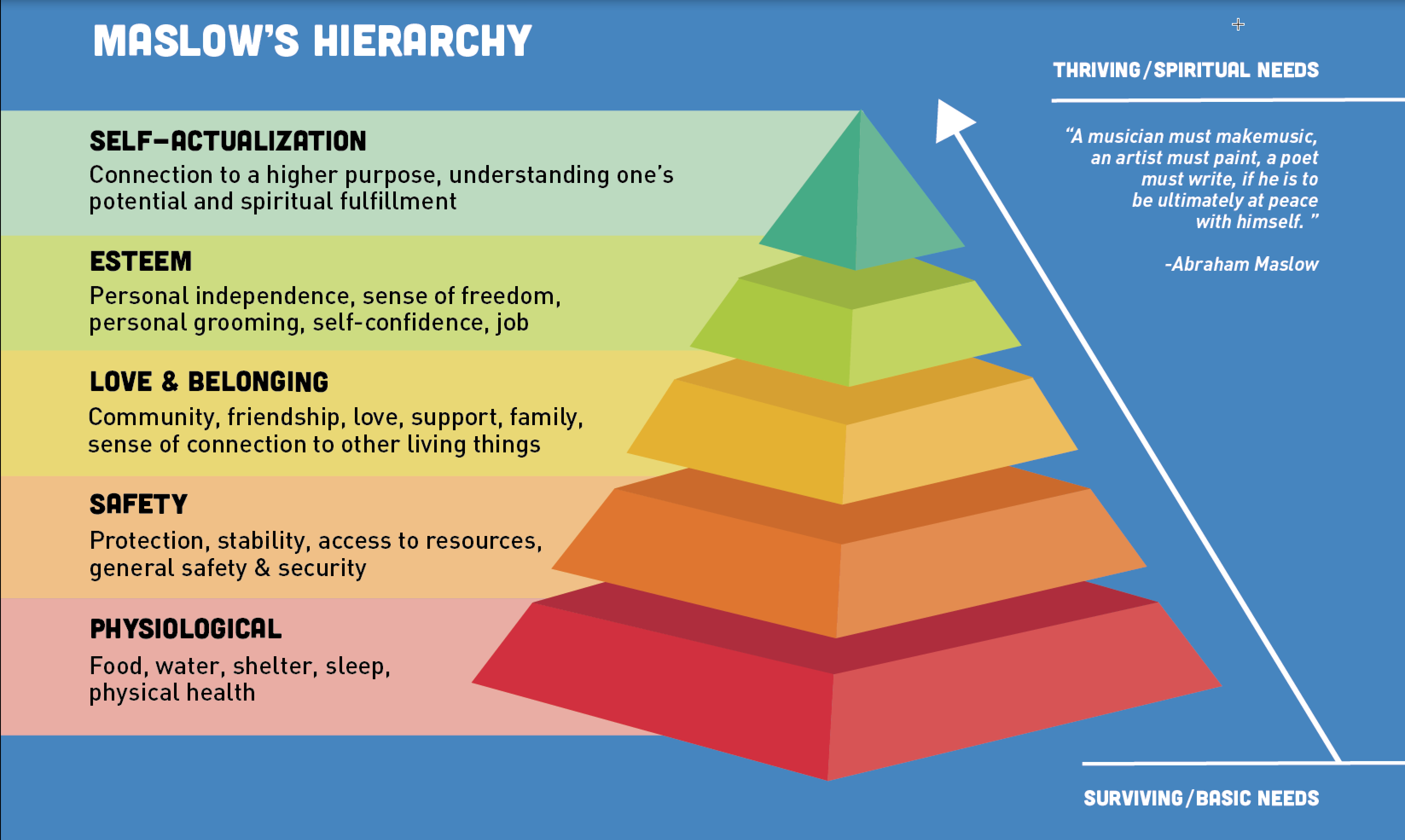
You have almost certainly encountered Maslow’s pyramid. The image is iconic: a triangle divided into five ascending layers, beginning with basic physiological needs at the base and reaching upward through safety, love, esteem, and finally self-actualization at the apex.
And yet, for most people, that pyramid stays exactly where it has always been — on the wall of a classroom, inside a textbook, or as a reference in a corporate training slide. Abstract. Intellectually interesting. But not something that tells you what to actually do with your Tuesday afternoon.
That gap between knowing the theory and having a practical structure to act on it is precisely where Acumentor’s 10 Life Segments Model enters the picture. And when you map these two frameworks side by side — Maslow’s timeless psychological theory and Acumentor’s action-oriented life model — what emerges is not a coincidence. It is a near-perfect alignment that reveals something important: human beings have always needed what Acumentor offers. Psychology just took eighty years to build the vocabulary for it.
This article is about that alignment — what it means, why it matters, and how understanding it can give you a fundamentally different lens for looking at your own life and growth.
A Quick, Honest Recap of Maslow’s Hierarchy
Before mapping the two frameworks together, it is worth revisiting Maslow with fresh eyes — not as a textbook diagram, but as a living, breathing description of what it actually feels like to be a human being trying to thrive.
Level 1 — Physiological Needs These are the basics: food, water, shelter, sleep, physical warmth. When these needs are unmet, nothing else matters. A person who has not slept in forty-eight hours is not thinking about career advancement or creative expression. The body demands its minimum requirements first.
Level 2 — Safety Needs Once the body is taken care of, the mind turns to security — physical safety, financial stability, health, structure, and predictability. This is the layer at which people ask: “Am I going to be okay? Is my world stable enough for me to plan and build?” Without it, anxiety fills the space where ambition could be.
Level 3 — Love and Belonging Needs This is where the social dimension of human life becomes central. The need for friendship, intimacy, family connection, community, and the sense of being genuinely understood and accepted. Loneliness, at this level, is not just emotional discomfort — it is a fundamental unmet need that undermines functioning at every other level.
Level 4 — Esteem Needs These split into two related directions: the need for self-esteem (confidence, competence, achievement, self-respect) and the need for recognition from others (status, reputation, respect from peers). When esteem needs are unmet, the result is not just low confidence — it is a kind of identity fragility that makes every setback feel catastrophic.
Level 5 — Self-Actualization Maslow described this as the desire to become the most that one can be — to realize one’s full potential, to pursue growth for its own sake, to live in alignment with one’s values and purpose. This is the least concrete of the five levels, but perhaps the most profound. It is not a destination. It is a direction.
Here is what Maslow himself understood — and what is often lost in the simplified pyramid diagram: these levels are not rigid, sequential gates. You do not fully complete one floor before ascending to the next. In reality, needs at multiple levels are active simultaneously. A person can be working on self-actualization and still have unresolved esteem needs. A person with strong social connections can still struggle with safety concerns. The pyramid is a map of emphasis and priority, not a checklist.
With that understanding in place, let us look at what Acumentor built — and why it rhymes so powerfully with what Maslow described.
Acumentor’s 10 Life Segments: Where Theory Becomes Action
Acumentor’s framework identifies ten interconnected areas of life that, when assessed and developed together, create the conditions for genuine, sustained, 360-degree growth. These are not motivational categories invented for a productivity app. They are the dimensions of human experience that research, psychology, and life coaching have consistently identified as foundational to a complete and fulfilling life.
The ten segments are:
- Lifestyle & Habits
- Professional & Career Growth
- Leisure & Work-Life Balance
- Mental & Emotional Health
- Physical Health & Wellness
- Financial Freedom
- Social & Relational Success
- Spiritual & Purpose-Driven Growth
- Creative Growth
- Intellectual Growth
At first glance, these look like a practical checklist of life domains. And they are. But look more carefully, and something else emerges — a deep structural resonance with the layered logic of Maslow’s hierarchy. Not a surface-level resemblance. A foundational alignment in how human needs organize themselves.
The Mapping: How Each of Maslow’s Levels Speaks to Acumentor’s Segments
Maslow’s Level 1 (Physiological Needs) → Physical Health & Wellness + Lifestyle & Habits
Maslow’s base layer — the non-negotiables of bodily existence — finds its direct parallel in two of Acumentor’s segments: Physical Health & Wellness and Lifestyle & Habits.
These are the segments that deal with the fundamentals of how your body functions from day to day. Sleep quality, nutrition, hydration, exercise, rest, and recovery. The daily routines and rituals that either support or undermine your physical baseline.
Maslow knew that when the body is not cared for, everything else deteriorates. Acumentor’s framework embeds that same logic. Poor physical health drains the energy you need for career performance, relationship investment, creative work, and intellectual growth. Neglected habits create the compound drag that makes every other ambition harder to reach.
The parallel is not metaphorical — it is structural. Just as Maslow placed physiological needs at the foundation of his pyramid, Acumentor treats physical wellness and daily habits as the bedrock that every other life segment is built upon.
The insight: You cannot build a life of meaning on a body that is running on empty. The hierarchy — and the 10 Life Segments — begin here, not because it is the least important, but because it is the most foundational.
Maslow’s Level 2 (Safety Needs) → Financial Freedom + Leisure & Work-Life Balance
Maslow’s second level is about security — the need to feel that your circumstances are stable enough to plan, invest, and grow without constant anxiety. In the modern world, few things create or destroy that sense of security as powerfully as finances and sustainable work rhythms.
Financial Freedom, as a life segment, is not just about wealth. It is about the psychological security that comes from having a stable relationship with money — knowing your needs are covered, your future is planned, and financial stress is not silently eroding your wellbeing. Financial instability, as Maslow’s model predicts and research consistently confirms, bleeds into every other domain. It strains relationships, impairs sleep, reduces cognitive performance, and generates a low-grade anxiety that makes genuine growth in any other area disproportionately difficult.
Leisure & Work-Life Balance addresses a different but equally important dimension of safety — the sustainability of your daily structure. Chronic overwork creates its own form of insecurity: burnout, health deterioration, relationship strain, and the erosion of the identity that exists outside your professional role. Sustainable balance is not laziness. It is the structural safety that protects everything else.
The insight: Financial stress and burnout are not just practical problems — they are threats to the psychological safety that human beings need to function well. Acumentor treats them as foundational segments because, in the hierarchy of human needs, they genuinely are.
Maslow’s Level 3 (Love and Belonging Needs) → Social & Relational Success + Spiritual & Purpose-Driven Growth
Maslow’s third level — the need for connection, belonging, love, and community — maps directly onto two of Acumentor’s most emotionally significant segments.
Social & Relational Success addresses the quality of your relationships: friendships, family bonds, romantic partnerships, professional networks, and community connections. Maslow was unequivocal — humans are social animals, and the unmet need for genuine belonging produces suffering that goes far beyond loneliness. It corrodes self-worth, undermines motivation, and creates a persistent background noise of dissatisfaction that no amount of individual achievement can silence.
Spiritual & Purpose-Driven Growth maps onto belonging in a less obvious but equally powerful way. Maslow recognized that belonging is not just interpersonal — it is also about feeling connected to something larger than oneself. A sense of purpose, a guiding set of values, a spiritual orientation, or a mission that transcends personal ambition are all expressions of this need for connection to something meaningful. The person who feels genuinely part of something — a community, a calling, a set of values — experiences the belonging that Maslow described even when external social ties are imperfect.
The insight: Loneliness is a hierarchy problem, not a personality flaw. And a life without purpose is a loneliness of a different kind — the loneliness of going through the motions without knowing why. Both segments exist because both forms of belonging matter profoundly to human flourishing.
Maslow’s Level 4 (Esteem Needs) → Professional & Career Growth + Mental & Emotional Health + Intellectual Growth
Maslow’s esteem level — arguably the most overlooked and underserved in modern personal development — maps to three of Acumentor’s segments, reflecting how multidimensional the need for self-respect and recognition actually is.
Professional & Career Growth addresses the esteem that comes from competence, contribution, and achievement within a domain. Maslow understood that people need to feel capable and recognized for that capability. Career stagnation is not just a financial problem — it is an esteem problem. When people stop growing professionally, the psychological cost shows up as frustration, restlessness, and a creeping doubt about their own value and potential.
Intellectual Growth serves the self-esteem dimension of Maslow’s level in a subtler way. The ability to think clearly, learn continuously, solve problems effectively, and engage meaningfully with complex ideas is a core component of how most people experience self-respect. Intellectual stagnation — the slow narrowing of curiosity and critical thinking — produces a diminished sense of one’s own competence that ripples outward into every other domain.
Mental & Emotional Health is, in many ways, the internal infrastructure of self-esteem. Maslow’s esteem layer requires not just external achievements and recognition, but a stable internal sense of worth. Unresolved emotional patterns, poor mental health, and lack of emotional regulation undermine that internal foundation regardless of what external achievements accumulate on top. You can have the title, the income, and the recognition — and still feel like you are living with a quiet sense of inadequacy that no accomplishment quite fixes. That gap is a mental and emotional health gap, which is why Acumentor treats it as a dedicated segment rather than a side concern.
The insight: Esteem is not earned only through achievement — it is also built through intellectual engagement and maintained through emotional health. Acumentor’s three-segment parallel to Maslow’s esteem level reflects exactly how complex, and how important, this layer truly is.
Maslow’s Level 5 (Self-Actualization) → Creative Growth + Spiritual & Purpose-Driven Growth + Intellectual Growth
Maslow’s apex — self-actualization — is the most expansive and the hardest to pin down. He described self-actualizing people as those who pursue growth for its own sake, who live in alignment with their deepest values, who create, explore, and transcend the boundaries of their previous selves. They are driven not by deficiency but by the desire to become.
Creative Growth maps most directly to this peak. Maslow considered creativity one of the defining characteristics of self-actualizing individuals — not just artistic creativity, but the broader capacity to think originally, to find novel solutions, to express oneself authentically. Suppressed creativity is not just a lost hobby. It is a ceiling on the kind of life you are able to imagine for yourself.
Spiritual & Purpose-Driven Growth appears again here, because purpose is both a belonging need (Level 3) and a self-actualization need (Level 5) — which is itself a reflection of how fluid and interconnected Maslow’s levels actually are. At the self-actualization level, purpose is no longer about finding a tribe or feeling like you belong. It is about living in full alignment with who you are and what genuinely matters to you. The person who has resolved their belonging needs but lacks a sense of what their life is for has not yet reached their fullest potential.
Intellectual Growth also appears at this apex, because the relentless pursuit of learning and understanding — not for credentials or career advancement, but for the sheer expansion of what one is capable of thinking — is itself a form of self-actualization. Maslow described the healthiest human beings as intensely curious, open to experience, and committed to ongoing growth. That is intellectual growth in its most pure form.
The insight: Self-actualization is not a single thing — it is the convergence of creative expression, purposeful living, and intellectual expansion. Acumentor recognizes this by treating each as a distinct segment worthy of dedicated attention and growth.
What the Mapping Reveals: Six Profound Insights
Beyond the segment-by-segment alignment, placing these two frameworks side by side reveals several truths about human growth that are worth sitting with.
1. Holistic Growth Is Not a Modern Trend — It Is a Psychological Necessity
The instinct to address all areas of life simultaneously, rather than optimizing one at the expense of others, is not a wellness buzzword. It is what Maslow’s hierarchy has always implied. Every level of the pyramid affects the others. Neglecting a foundational layer creates fragility in everything built above it. Acumentor’s 10 Life Segments Model operationalizes this insight — it is a practical commitment to the wholeness that Maslow described theoretically.
2. Most People Are Living at Maslow’s Level 2 and 3 While Pretending to Work on Level 5
Here is an uncomfortable truth: a significant number of people who believe they are pursuing self-actualization — building careers, chasing goals, seeking purpose — are actually still managing unresolved needs from the middle of the pyramid. Unaddressed financial instability, strained relationships, and unacknowledged emotional patterns are silently limiting their growth. You cannot self-actualize on a foundation of unresolved safety or belonging needs. Acumentor’s assessment makes those unresolved gaps visible — which is where real growth begins.
3. Growth Gaps Are Not Failures — They Are Navigational Data
Maslow never suggested that most people reach self-actualization cleanly or completely. The pyramid is descriptive, not judgmental — it maps where human beings are, not where they should have been by now. Acumentor’s framework carries the same spirit. A low score in a life segment is not a verdict on your worth as a person. It is information about where the most consequential growth opportunity lies. And unlike Maslow’s theory, Acumentor gives you something practical to do with that information.
4. The Hierarchy Is Not Linear in Real Life — and Neither Is the 10 Segment Model
One of Maslow’s most misunderstood insights is that the levels are not strict sequential gates. People experience needs at multiple levels simultaneously, and progress is rarely tidy. Acumentor embraces this same non-linearity by encouraging users to work on two or three segments at a time rather than attempting to master all ten simultaneously. The framework is structured, but the journey is human — which means it is messy, iterative, and deeply individual.
5. The Body Is the Beginning, Not the Afterthought
Both frameworks place physical wellbeing at the foundation — and both are frequently ignored on this point. It is remarkably common for ambitious people to treat their physical health as a variable they can defer until their career goals are met, their finances are sorted, or their relationships are stable. But Maslow’s hierarchy is explicit: you cannot build anything sustainable above the physiological foundation. Acumentor’s emphasis on Physical Health & Wellness and Lifestyle & Habits as core segments is not a concession to wellness culture — it is a reflection of the deepest structural insight in motivational psychology.
6. Purpose Is Both a Middle-Level Need and an Apex Aspiration
This is perhaps the most nuanced alignment between the two frameworks. Spiritual & Purpose-Driven Growth appears in Acumentor’s model as a single segment, but it maps onto at least two levels of Maslow’s hierarchy simultaneously — belonging (Level 3) and self-actualization (Level 5). This reflects the genuine complexity of purpose in human experience: we need it for connection, and we need it for transcendence. It is not just about belonging to something. It is about becoming something. Acumentor treats purpose as its own distinct domain precisely because it operates at multiple levels and cannot be reduced to any single psychological function.
Why the 10 Life Segments Model Goes Where Maslow Could Not
Maslow gave us an extraordinary gift: a way to understand human motivation that was both scientifically grounded and deeply humanistic. But Maslow’s hierarchy was never designed to be a personal development tool. It was a theoretical framework — a map, not a GPS.
The limitations of the pyramid as a practical guide are well-documented. It does not tell you which of your specific needs are currently unmet. It does not give you a way to measure your progress across different domains of life. It does not offer a next step — a concrete, personalized place to begin.
This is exactly what Acumentor’s 10 Life Segments Model was built to do. It takes the profound insight that human needs are layered, interconnected, and holistic — which Maslow established — and translates it into something you can actually use on a Tuesday afternoon.
The free Success Path Assessment does not ask you to place yourself on a philosophical pyramid. It asks specific, structured questions across all ten life areas — questions designed to surface not just where you think you are, but where the data of your actual habits, attitudes, and behaviors suggests you genuinely are. The result is not a label or a personality type. It is a clear, area-by-area picture of your current growth gaps — the specific places where unmet needs are quietly limiting your overall flourishing.
And then — unlike Maslow’s pyramid — it gives you a roadmap.
The Practical Question Maslow’s Theory Couldn’t Answer: What Do I Do Now?
Here is the conversation that Maslow’s hierarchy cannot have with you:
“You have identified that your esteem needs are unmet. Now what? What specifically should you do tomorrow, and next week, and over the next three months, to begin addressing that gap in a way that creates lasting change?”
The pyramid is silent on this. And that silence is where most people get stuck — knowing the theory, recognizing the need, and still not knowing how to begin.
Acumentor answers that question directly.
When your assessment reveals a gap in Professional & Career Growth, you receive a personalized roadmap for that segment — not generic advice, but structured, sequential actions with clear milestones, habit-building strategies grounded in behavioral science, and a 90-day framework designed to move you from awareness to momentum.
When your assessment surfaces a gap in Mental & Emotional Health, the roadmap for that segment gives you the practical tools — daily and weekly practices, reflection prompts, and measurable targets — to begin building the emotional infrastructure that Maslow would recognize as foundational to esteem.
When your assessment shows that Spiritual & Purpose-Driven Growth is underdeveloped — that the thread connecting your daily choices to something meaningful is frayed or absent — the roadmap helps you begin rebuilding that thread with intentional, incremental action.
This is the bridge from psychology to practice. From theory to transformation. From the pyramid on the wall to the roadmap in your hand.
A Word About What Both Frameworks Get Right: No Level Is Optional
One of the most important things Maslow’s hierarchy insists on — and Acumentor’s 10 Life Segments Model reflects — is that there are no optional dimensions of a complete human life.
You cannot decide that financial security does not matter to you and expect your safety needs to be met. You cannot decide that relationships are overrated and expect your belonging needs to be satisfied. You cannot decide that physical health is secondary and expect your physiological foundation to hold.
In the same way, you cannot decide that Creative Growth is not your thing, or that Intellectual Growth is for academics, or that Spiritual & Purpose-Driven Growth is too abstract to bother with — and expect to experience the kind of holistic flourishing that both frameworks describe as the hallmark of a fully thriving human life.
This does not mean every segment requires equal investment at every moment. Maslow never said all needs must be met to the same degree simultaneously. What it does mean is that consistent neglect of any segment — any layer of the hierarchy — creates a growth gap that silently limits the potential of everything else.
The assessment results that surprise people most are not the ones that show gaps in areas they have been ignoring. They are the ones that reveal how much the ignored gaps have been quietly affecting the areas they thought were strong.
Conclusion: Maslow Built the Theory. Acumentor Built the Map.
Abraham Maslow spent decades studying the most fully functioning, most deeply human people he could find — trying to understand what it actually looked like to thrive. What he found was not that successful people had simply worked harder, or wanted more, or been luckier. What he found was that they had attended, with remarkable intentionality, to the full range of human needs — not just the ones that were most visible or most socially rewarded.
The hierarchy he built from those observations is one of the most enduring contributions to our understanding of human motivation. It tells us something fundamental and true: that human beings have layered, interdependent needs, and that neglecting any layer creates consequences that ripple through all the others.
Eighty years on, Acumentor’s 10 Life Segments Model honors that insight by turning it into something actionable. The same layered logic. The same recognition that growth is holistic, not linear. The same understanding that physical foundation enables emotional security, that belonging enables esteem, that esteem enables the self-actualization that most people say they want but few structure their lives to achieve.
The difference is that Acumentor does not leave you with a theory. It gives you a mirror — a structured, honest assessment that shows you exactly where your hierarchy is solid and where it has gaps you may not have seen. And then it gives you a map for closing those gaps, one segment at a time, in a realistic, structured, and genuinely personalized way.
Maslow gave us the pyramid. Acumentor gives you the path.
At Acumentor, we believe that understanding why you are where you are is only the beginning. The real work — and the real growth — starts when you can see clearly where your gaps are and have a practical plan to address them. Our free 360° Success Path Assessment evaluates your current standing across all 10 life segments, identifies your most impactful growth opportunities, and provides you with personalized roadmaps to begin building the kind of life that Maslow spent his career describing.
Take Your Free Success Path Assessment