
Robert retired on a Friday in March with a number he’d spent thirty years building toward, and by every measure his advisor used, it was a good number. Diversified portfolio, conservative withdrawal rate, the mortgage paid off, healthcare accounted for. He’d done everything right. He spent the first few weeks doing exactly what he’d always pictured — sleeping in, playing golf twice a week, finally getting to the books stacked on his nightstand.
By month four, something had gone quietly wrong, and he couldn’t name it.
He wasn’t unhappy, exactly. He was diminished. Slower to think of the right word in conversation. Less interested in things that used to hold his attention for hours. He caught himself checking the time on ordinary afternoons the way people do when they’re waiting for something, except there was nothing left to wait for. His wife noticed it before he did — a kind of dimming, she called it, though neither of them could point to a single cause.
What made it stranger was his neighbor, Frank, who’d retired from a mid-level operations job the same spring, with by his own admission a noticeably smaller nest egg than Robert’s. Frank should have had more to worry about. Instead, he seemed to be getting sharper by the month — quick with a joke, full of opinions on things he’d apparently been reading about, busy in a way that looked less like filling time and more like being genuinely pulled somewhere. Robert ran into him at the hardware store one Tuesday, mid-afternoon, and asked what he’d been up to.
“Working,” Frank said, and laughed at Robert’s expression. “Not really working. It’s complicated. I’ll tell you sometime.”
Robert went home more unsettled than he expected to be. He had the bigger portfolio. He had followed every rule the financial industry had given him. So why did the man with less money seem to be having a better retirement?
The Retirement Industry Solved the Wrong Problem
For decades, the entire architecture of retirement planning has been built around a single question: will you have enough money to stop working? It’s a legitimate question, and a genuinely difficult one to answer well. But it’s also an incomplete one, because it quietly assumes that stopping work is automatically a desirable outcome once the finances allow for it.
That assumption deserves far more scrutiny than it usually gets.
Work, for most people, is not just a source of income. It’s a source of structure, identity, social contact, intellectual stimulation, a sense of competence, and — for many — a genuine sense of contribution to something beyond themselves. When retirement removes the paycheck, it also quietly removes all of that, often without anyone warning you it was coming as a package deal.
This is why a meaningful number of retirees, particularly those who built their identity heavily around their career, report a measurable decline in life satisfaction, cognitive sharpness, and physical vitality in the years immediately following full retirement — even when their financial situation is completely secure. The money did exactly what it was supposed to do. The plan, in the fuller sense, was never complete.
Financial Readiness Is Real — It Just Isn’t the Whole Answer
None of this is a case against building wealth or investing wisely for your later years. Financial security is not optional. It’s one of the foundational pieces of a life that allows you to age with dignity, options, and freedom from chronic anxiety about money. Understanding how compound growth works and how to manage risk as your time horizon shortens genuinely matters, right up to the day you retire and well beyond it.
But financial readiness answers only one question: can you afford to stop? It says nothing about whether you should stop entirely, or what stopping entirely will cost you in the parts of life a balance sheet can’t measure. Two people can retire with wildly different net worths — Robert’s and Frank’s, for instance — and have completely different experiences of the years that follow, because money buys options, but it doesn’t, by itself, manufacture purpose.
What Vitality Actually Means — And Why Retirement Threatens It
Vitality isn’t the same thing as physical energy, though the two are connected. It’s a broader psychological state: the sense of being alive, engaged, capable, and relevant. It’s what let Frank walk into a hardware store on a Tuesday afternoon looking like a man with somewhere to be, while Robert, twenty pounds lighter on responsibility, felt like he was going through the motions.
Vitality is built and sustained through a specific set of inputs: regular cognitive challenge, a sense of competence and mastery, social connection, a feeling of being needed, and structured engagement with the world rather than passive observation of it. Full-time work, whatever its frustrations, typically supplies all five of these automatically. You don’t have to design them. The job designs them for you.
Remove the job entirely, and all five inputs have to be deliberately replaced — or they quietly disappear. This is the part of retirement that catches so many people off guard. The freedom is real. But freedom without structure tends to produce drift rather than fulfillment, and drift is where vitality goes to die.
The Identity Collapse Nobody Warns You About
For a large number of people, professional identity isn’t a costume they put on and take off. It’s woven into how they understand themselves — their competence, their value, their place in the social order. When someone asks “what do you do,” the answer is rarely just informational. It’s a piece of self-definition.
Full retirement, especially when it happens abruptly, can produce something close to an identity vacuum. The titles, the responsibilities, the daily problems that made you feel capable and needed all disappear in a single transition, often within weeks. For people who haven’t built an identity outside their career, this can feel less like liberation and more like erasure.
This isn’t a character flaw or a sign of being unable to “let go.” It’s a predictable consequence of removing a structure that was doing a tremendous amount of identity-supporting work, all at once, without a replacement — which is exactly the gap Robert had fallen into without realizing it had a name.
Why Purposeless Free Time Isn’t the Reward It Appears to Be
There’s a quiet myth embedded in how most people imagine retirement: that an abundance of unstructured free time is, by definition, a good thing. In small doses, it is. In large, indefinite quantities, it tends to backfire.
Achievement and purpose are not the same thing, and confusing the two is one of the more consequential mistakes people make in how they design their lives — including in how they design retirement itself. A calendar with nothing on it doesn’t automatically produce contentment. Without a reason to get up, plan, contribute, and engage, days begin to blur into one another. Motivation, which used to be supplied externally by deadlines and responsibilities, has nowhere left to attach itself. Many retirees describe this not as relaxation but as a strange, low-grade restlessness — busy with nothing, tired without having done anything, quietly aware that something essential is missing.
This is precisely why purpose has to be treated as a deliberate design decision in retirement planning, not an afterthought that will somehow sort itself out once the financial pieces are in place.
The Physical and Cognitive Cost of Total Disengagement
The connection between purposeful engagement and physical health goes well beyond intuition. People who remain mentally and socially active after leaving full-time work tend to maintain sharper cognitive function and better overall health outcomes than those who disengage entirely. The brain, much like a muscle, responds to use. Problem-solving, learning, social negotiation, and the daily friction of meaningful work all keep cognitive systems active in ways that passive leisure simply doesn’t replicate.
There’s also a less discussed but very real risk: the loss of a daily rhythm tends to erode the habits that sustain physical health more broadly — consistent sleep, movement, social contact, a reason to leave the house. Structure isn’t just psychologically useful. It’s physiologically protective — the same reason that prolonged, undesigned time away from a working rhythm needs a deliberate re-entry plan rather than being left to sort itself out, whether that time away is a mid-career pause or the whole of retirement.
Reframing Retirement: From an Ending to a Redesign
The healthiest way to think about retirement isn’t as the termination of work, but as the end of obligatory work — work performed primarily for survival, status, or external expectation — and the beginning of chosen work, performed because it genuinely engages you, contributes something you care about, and keeps you connected to people and purpose.
This single reframe changes almost everything about how the later decades of life can be designed. It isn’t about whether to work. It’s about working differently — on your own terms, at your own pace, around what matters most to you now.
Career has always been just one of several interconnected dimensions that determine how fulfilled a life actually feels, and retirement doesn’t remove that piece from the puzzle. It simply gives you the rare freedom to reshape it, without the financial pressure that constrained your choices the first time around.
What Chosen Engagement Can Actually Look Like
None of the following require returning to a demanding, full-time grind. They’re worth considering precisely because they offer flexibility, meaning, and income in whatever proportion actually serves your life — not someone else’s idea of what retirement should look like.
Consulting or advisory work in your former field. Decades of judgment and pattern recognition don’t become worthless the day the paycheck stops. Many companies pay a premium for exactly that kind of institutional knowledge, without wanting the politics or the commute that came with full employment.
Mentoring and coaching. Few things restore a sense of purpose as reliably as helping someone else grow. Guiding someone earlier in a career you’ve already navigated provides social connection, intellectual engagement, and the quiet satisfaction of watching your knowledge create value in someone else’s life.
Teaching or training. Community colleges, certification bodies, and corporate training programs consistently look for instructors with real-world experience. Teaching forces continuous engagement with your subject and regular contact across generations — at a fraction of the hours full employment demanded.
Board seats and advisory roles. For retirees with senior or specialized expertise, these offer real intellectual engagement and ongoing relevance in a field, measured in days per quarter rather than hours per week.
Small-scale, lower-risk entrepreneurship. Retirement removes much of the financial pressure that makes starting something new genuinely risky earlier in life, which makes it possible to build something purely because it interests you.
How to Decide What’s Right for You
The right answer isn’t the same for everyone, which is precisely why it deserves real thought rather than default drift into either extreme — working exactly as hard as before, or stopping entirely and hoping purpose sorts itself out on its own.
A few questions are worth sitting with honestly: What parts of your career did you genuinely enjoy, separate from the income or the title? Which skills do you actually want to keep using, and which are you relieved to set down? How much structure do you personally need to feel grounded? What does meaningful contribution look like to you now, separate from what it looked like when you were building a career? The clarity that comes from understanding what your money is actually for applies just as directly to how you spend your time once the financial pressure to earn is gone.
What Robert Finally Learned From Frank
It took another month before Robert asked Frank directly, over a fence line instead of a hardware aisle, what exactly he’d meant by “complicated.”
Frank told him he’d felt the same dimming Robert was describing, almost immediately after retiring — and that it had scared him enough to book a session with a mentor through Acumentor, built around their Success Path Assessment. He’d gone in expecting a financial checkup and gotten something else entirely: a map of where he actually stood across the parts of life that determine whether the years ahead feel alive or merely comfortable — purpose, connection, contribution, growth, not just the account balance.
What came out of that conversation was small and specific, not dramatic. Frank started spending eight hours a week consulting for his old industry, plus one afternoon mentoring a young operations manager who reminded him of himself twenty years earlier. Nothing about his income needs had changed. What had changed was that he had somewhere to be, someone who needed his judgment, and a reason to keep reading the trade news he used to skim past out of habit.
“I had the plan for the money,” Frank told him. “I never had a plan for the rest of me. Turns out that part needed just as much thought.”
Robert requested his own consultation that week. He didn’t need the money. What he needed, it turned out, was exactly what Frank had found — a structure that could see the parts of retirement a portfolio was never built to measure, and help him design them on purpose instead of hoping they’d sort themselves out.
The Real Retirement Plan Has Two Halves
A genuinely good retirement plan accounts for both halves of the equation: the financial readiness to stop being dependent on a paycheck, and the psychological readiness to remain engaged, useful, and vital. One without the other is an incomplete plan, no matter how sophisticated the spreadsheet behind it looks.
If you’re approaching retirement, or already there and feeling the quiet restlessness this article describes, the most useful next step isn’t to abandon your financial plan — it’s to expand it. The Success Path Assessment is built to help you see exactly where you stand across the areas of life that determine whether the years ahead feel alive, so they can be designed with the same intention you brought to building your career in the first place.
You may also like:
 Why Financial Independence Matters More Than Ever Right Now
 The Hollow Win: Why Success Feels Empty When You Don’t Know What It’s For
 The Holiday Paradox: Why You Come Back More Exhausted Than When You Left
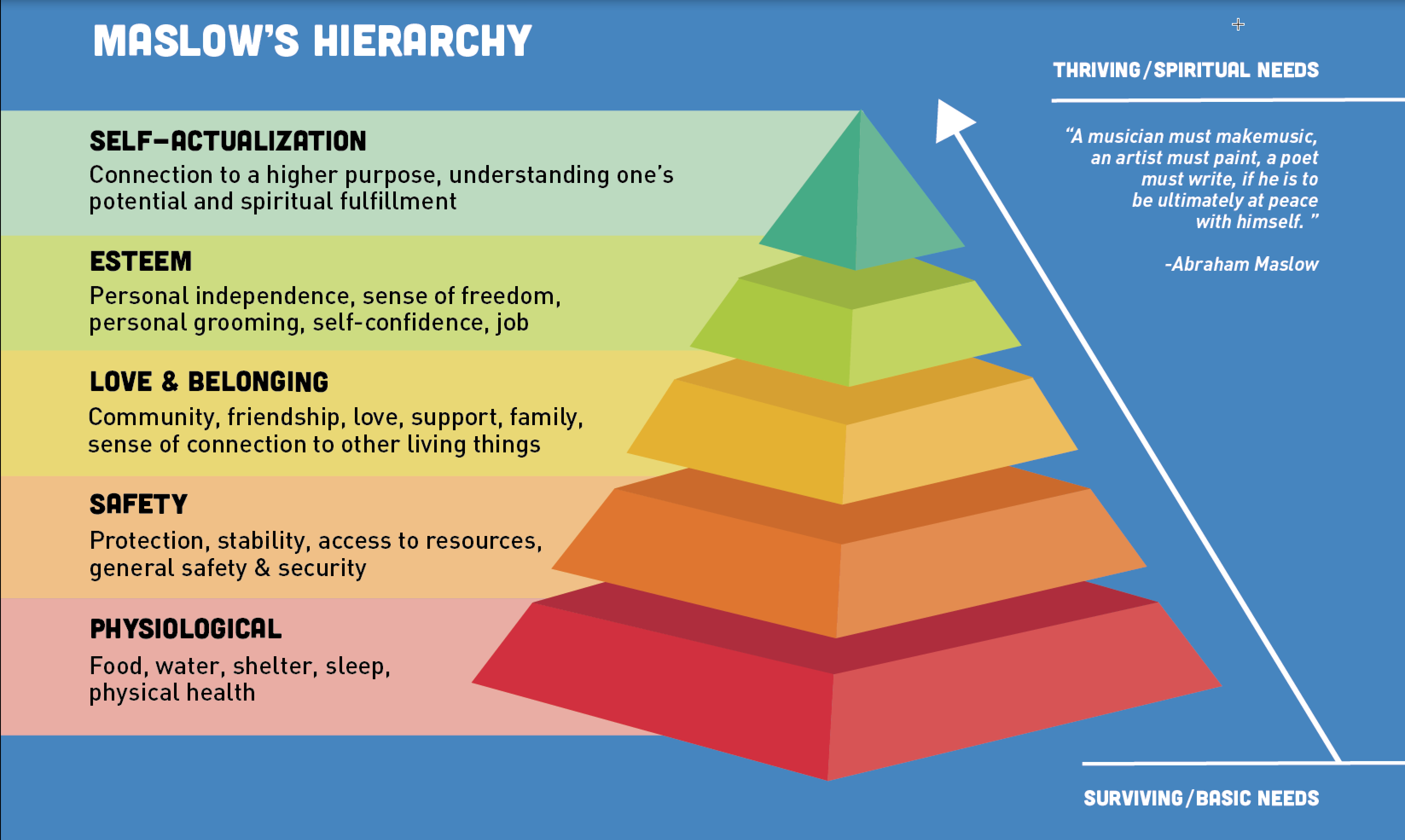 Maslow’s Hierarchy of Needs, Decoded: The Practical Roadmap Psychology Never Finished Building